
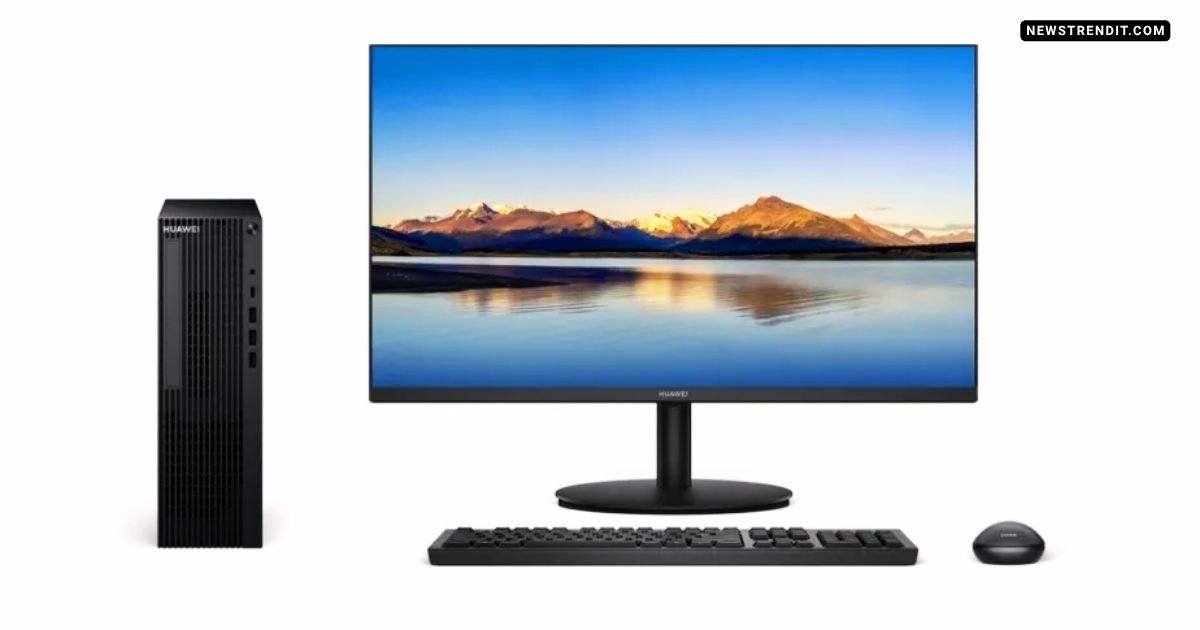
Huawei Launches New Qingyun PCs.
Huawei unveils two new homegrown desktop PCs — Qingyun W515y and W585y — powered by its Kirin 9000X processor and Linux-based OS. The move marks Huawei’s big step toward tech independence in China.
Huawei Introduces Homegrown Computers with Linux-Based Operating Systems and Custom Processors. Another significant step toward technological independence has been made by Huawei. Two new desktop computer models that are totally composed of Chinese components have been introduced by the company.
These new systems, along with the W515y and W585y models, are part of the “Qingyun” series. This is Huawei’s most recent attempt to create computer solutions independent of foreign software and hardware.
These computers run locally designed Linux-based operating systems rather than Microsoft Windows and are powered by Huawei’s Kirin 9000X chip, which was created in China. Customers have a choice between the Galaxy Kylin V10 and Tongxin’s UOS V20.
The Kirin 9000X is reportedly an 8-core Arm-based processor with 16 threads operating at 2.5 GHz, while complete hardware specifics have not yet been disclosed. It might be built as a big-core alone SoC or as a big.LITTLE architecture. Both desktops handle both flash storage and conventional hard drives, and they have quad-channel LPDDR5x memory.
There are several choices for connecting. The back panel has four more USB ports, wired network connectivity, a legacy serial interface, and twin VGA and HDMI video output choices. The front panel has one USB Type-C port and three USB 3.2 ports. These systems are small and effective, weighing around 3.6 kg and having a width of 300 mm. Although pricing and release dates have not yet been disclosed, Huawei also comes with a keyboard and mouse of its own.
Notably, rather of using its proprietary HarmonyOS, Huawei has opted to outfit these computers with Linux-based operating systems.
Huawei Launches New Qingyun PCs
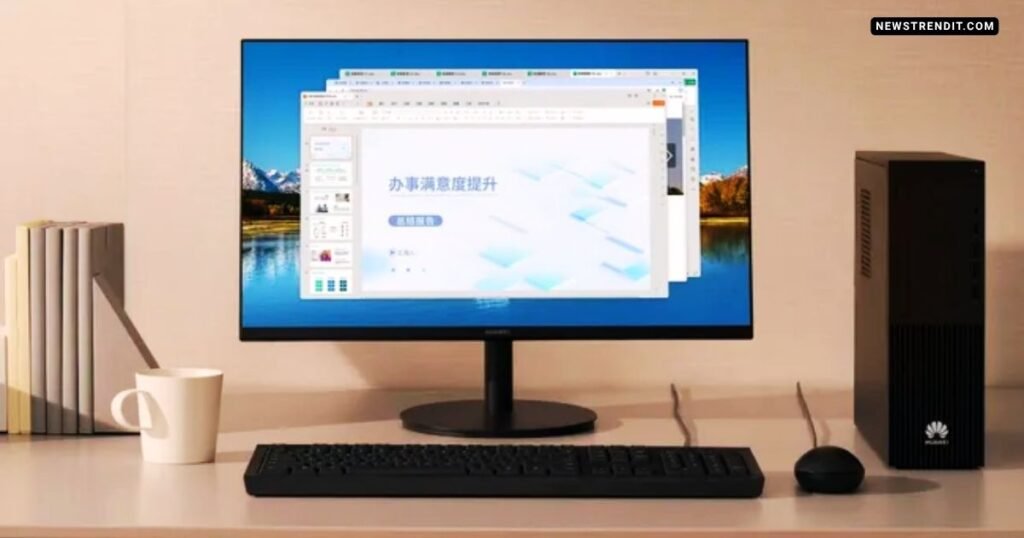
HarmonyOS and Huawei’s Approach
To put things in perspective, HarmonyOS is a brand-new operating system that doesn’t rely on Linux or any other foreign technology. Huawei presently has no plans to expand it to desktop PCs, but it does power some laptops and smartphones.
This action implies that Huawei is customizing various solutions for various clientele groups. While Linux-based computers offer more stability and wider software compatibility for daily and business use, HarmonyOS may be appropriate for certain mission-critical applications. If Huawei wants to increase its client base and market share, picking a reputable, dependable platform like Linux is a wise move.
The New Processor and Models
Huawei has introduced its new Qingyun W515y and W585y desktop computers in the Chinese domestic market. These devices come with Huawei’s proprietary Kirin 9000X CPU and offer users an option between the Tongxin UOS V20 and Galaxy Kylin V10, both of which are intended to rival Windows in China.
The Kirin 9000X is an 8-core, 16-thread CPU made by HiSilicon with a basic clock speed of 2.5 GHz, according to reports, even though Huawei hasn’t made it public yet. It is thought to be the replacement for the Kirin 9000C, which drove Huawei’s previous Qingyun W515x and W585x devices.
Three Cortex-A77 cores (one at 3.13 GHz and three at 2.54 GHz) and four Cortex-A55 cores at 2.05 GHz were part of the original Kirin 9000, which was built on the Arm architecture. A 24-core Mali-G78 iGPU was also included. Huawei has created a number of Kirin 9000 chip variations that are tailored for desktops, laptops, and smartphones. Before U.S. trade restrictions affected production, TSMC used a 5nm+ FinFET EUV (N5) technology to make the chip.
Design and Hardware
The Qingyun W515y and W585y models’ complete specifications have not yet been made public by Huawei. Nevertheless, it has verified that both include options for SSD and HDD storage, quad-channel LPDDR5x memory, and even an optional DVD-RW optical drive. Both desktops are the same size, measuring 11.5 x 3.7 x 12.4 inches (293 x 93 x 315.5 mm), and weigh 7.9 pounds (3.6 kg) without a hard drive or optical drive. They are little lighter than their predecessors, although they are about the same size.
The new models’ designs are the same as those of the preceding generation. Three USB 3.2 Gen 1 Type-A ports, a 3.5mm combination audio connector, and a USB Type-C port are all available on the front panel. Four USB 3.2 Gen 1 Type-A connections, a serial port, a gigabit Ethernet port, three 3.5mm audio jacks, VGA, and HDMI ports are all located on the back panel.
Huawei includes the M100 wired mouse and K100 wired keyboard with both devices. The cost and release dates of the new desktop computers, however, have not yet been disclosed by the corporation. Huawei Launches New Qingyun PCs with Kirin 9000X Chip and Linux OS.