
Jamaica Battles Aftermath of Hurricane Melissa. Jamaica is devastated by Hurricane Melissa, which causes widespread flooding, power outages, and economic instability.
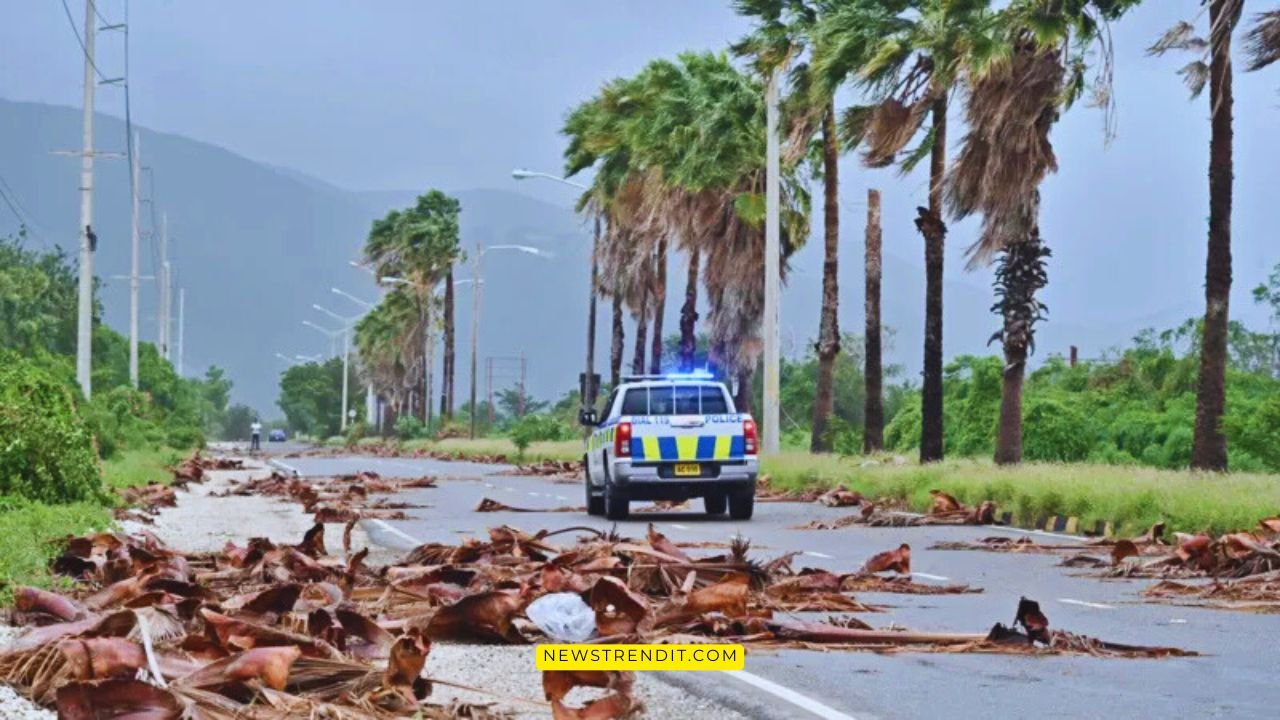
One of the greatest storms in Jamaica’s modern history, Hurricane Melissa, tore across the island with devastating fury on Wednesday morning, leaving the island in ruins. For many Jamaicans, life has come to a standstill as major cities are swamped in floodwaters, communication networks are down, and three-quarters of the island is without electricity.
A Quiet Morning Following the Storm
As power disruptions swept through Jamaica, the typical sounds of island life gave way to quiet. Many people were left without shelter as homes were pounded throughout the night by severe winds and torrential rainfall. Rising floodwaters in western Jamaica engulfed entire neighborhoods. One local authority described the devastation as “looking like something out of an apocalyptic movie.”
Late on Tuesday, Prime Minister Andrew Holness designated the island a disaster area, citing “devastating impacts” on critical infrastructure, houses, and hospitals. Holness acknowledged concerns about potential losses as rescue crews struggle to reach impacted villages, despite the fact that no deaths have been officially reported.
Unprecedented Destruction with Record-Breaking Winds
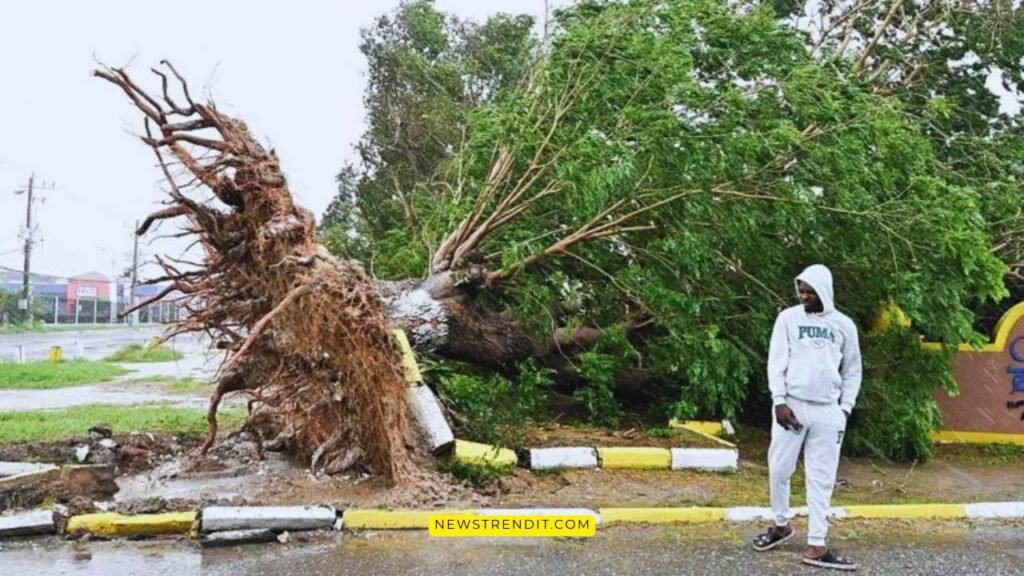
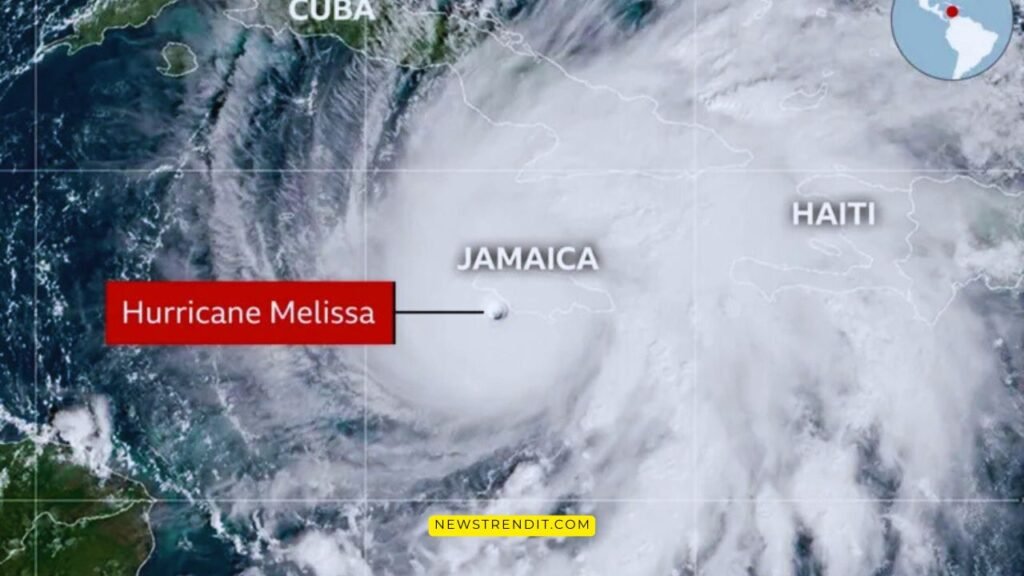
Hurricane Melissa had winds of 298 km/h (185 mph) at its strongest point, which was more powerful than Hurricane Katrina, which destroyed New Orleans in 2005. According to meteorologists, the exceptionally warm Caribbean waters contributed to the storm’s quick intensification, indicating the growing threat posed by climate change.
The Category 5 hurricane had torn roofs off concrete homes, uprooted enormous trees, and snapped power poles all over the island by the time Melissa made landfall. The situation was grave in the parish of St. Elizabeth in the southwest. Local Government Minister Desmond McKenzie stated, “The entire area is under water,” adding that a number of residents were stranded in their houses.
Narratives of Loss and Survival
Verna Genus, a 73-year-old vegetable farmer from Carlisle, St. Elizabeth, was one of those impacted. Her four-bedroom home’s zinc roof was ripped off while the storm raged. Her sister June Powell, who resides in the UK, said, “She was crying on the phone.” “We’re all finished,” she said repeatedly. Families overseas are waiting anxiously for updates from their loved ones because communication links are still down.
A large portion of the fresh produce on the island is produced at St. Elizabeth, which is frequently referred to as “Jamaica’s breadbasket.” Local farmers will have a slow and challenging economic recovery when their crops and fields are destroyed.
Two Partitions in Montego Bay
The primary airport and center of Jamaica’s tourism sector, Montego Bay, on the country’s north coast, was reduced to rubble. According to Mayor Richard Vernon, flooding literally split the community in two. The city was inundated with torrential rain once the wind died down. He added that his top goal at sunrise was only “to check if everyone is alive,” as “one side of Montego Bay is now cut off from the other.”
The economy of Jamaica has suffered greatly as a result of the damage. Thousands of jobs and livelihoods are now at risk due to the disruption in the tourism industry.
Trapped and Terrified Tourists
The storm caused hours of anxiety and uncertainty for thousands of travelers. “The glass doors were vibrating, and it felt like the entire building was shaking,” Pia Chevallier, who was traveling from Cambridge with her teenage son, told the BBC. It was terrible.
While Kyle Holmes from Bolton claimed his hotel in Lucea had turned into “a disaster zone,” Wayne Gibson from Kent, another visitor, talked about huddling with his family in a community shelter in Ocho Rios.
Safety and Environmental Issues
In an uncommon crocodile warning, the Jamaican Health Ministry warned citizens that reptiles might have been driven into populated areas by floodwaters. Melissa’s quick intensification, according to environmental experts, was a direct result of increased ocean temperatures, highlighting the Caribbean countries’ susceptibility to extreme weather associated with climate change.
A Recovering Nation
Hurricane Melissa, which had weakened to a Category 3 hurricane but was still capable of reaching speeds of over 200 km/h (124 mph), made landfall in Cuba early on Wednesday. With flooded roads, devastated infrastructure, and towns isolated from relief, Jamaica is still in a state of paralysis.
Relief for displaced people and the restoration of vital services are the immediate challenges, even though the island’s catastrophe bond—a type of national disaster insurance—offers hope for financial recovery. “Our focus now is on survival, recovery, and rebuilding stronger,” Prime Minister Holness said.