
Reagan’s 1987 Speech Sparks Modern Trade Rift: Why Trump Halted Canada Talks
The Reagan Ad That Collapsed US–Canada Trade Talks: What Really Happened?
Reagan’s Words, Trump’s Fury: How an Old Speech Shook US–Canada Relations
Explained: The Controversial Reagan Ad That Ended US–Canada Trade Negotiations
Canada’s Reagan Ad Fallout: Why Trump Called It ‘Fake’ and Killed Trade Talks
The Reagan Ad Controversy: How a Vintage Speech Ignited a Modern Trade War
🇺🇸 For the Reagan Ad & US-Canada Trade Talks Article:
What Was in Reagan’s Commercial That Caused the US-Canada Trade Talks to Break Down?
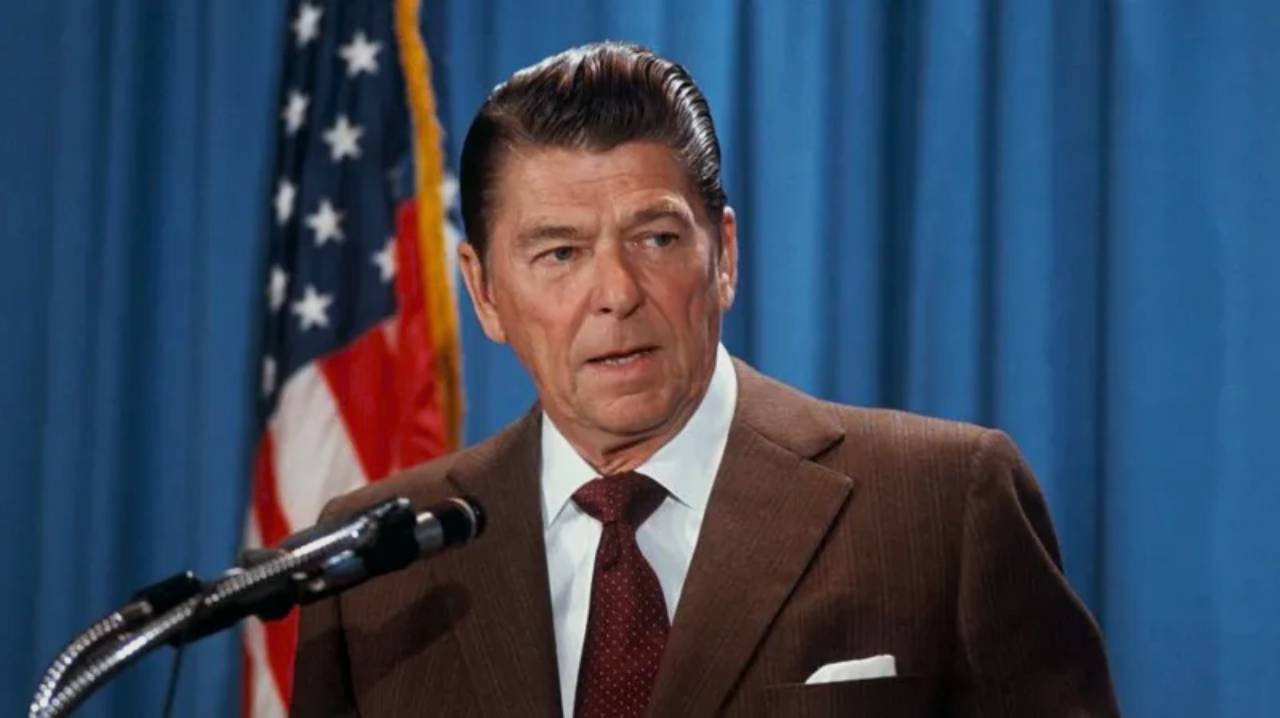
Unexpectedly, U.S. President Donald Trump declared that all trade talks with Canada will be immediately halted. The action follows the publication of a provincial government of Ontario ad in which former US President Ronald Reagan criticizes tariffs. As soon as the advertisement became viral, it became the subject of debate.
The one-minute film features snippets of Reagan’s 1987 address in which he talks on tariffs, free trade, and the perils of protectionist measures. The issue? Although the words are genuine, the order in which they appear in the advertisement changes their meaning from what Reagan had in mind.
The Ad That Got It All Started
“When someone says, ‘Let’s impose tariffs on foreign imports,’ it looks like they’re doing a patriotic thing by protecting American products and jobs,” Reagan says at the beginning of the advertisement. And occasionally, for a brief period of time, it does work—but only briefly.
Although these statements are true, they are not near the start of Reagan’s original radio speech, “Address to the Nation on Free and Fair Trade,” but rather midway through. Reagan was dealing with a legitimate economic conflict with Japan in 1987. He stressed that free trade, not protectionism, was the path to long-term development even if he had placed modest taxes on some Japanese items. He also made the point that the Great Depression was exacerbated by tariffs.
Words Rearranged, Meaning Modified
“Over the long run, such trade barriers hurt every American — worker and consumer,” the advertisement continues after that.
Reagan did repeat these things once more, but not in this order. He had previously used that word in his complete speech to explain why he was first reluctant to implement tariffs. Reagan described it as a “special case” and claimed he only took this action because certain foreign corporations were breaking trade agreements. It is evident from the context that Reagan was supporting free trade rather than opposing it.
The Perils of Trade Conflicts
“High tariffs inevitably lead to retaliation by foreign countries and the triggering of fierce trade wars,” is the next genuine statement.
From Reagan to Trump: How a 1987 Speech Disrupted Modern Trade Talks

Reagan’s remarks are also accurate in this section of the advertisement, but when the sentences around it are removed, the meaning changes. Reagan used this quote in his 1987 speech to describe the consequences of home sectors depending too much on government protection. He cautioned that foreign countries retaliate, prices increase, and businesses cease developing.
Reagan stated in full:
Eventually, home businesses begin to depend on high tariffs as a sort of government protection. They cease to compete and to implement the technology advancements and creative management required to thrive in global marketplaces. Excessive tariffs invariably cause foreign nations to retaliate and start bitter trade wars.
The Effects of Protectionism
Reagan says, “Then the worst happens,” as the advertisement goes on. Businesses and sectors close, markets contract and collapse, and millions of people lose their employment.
Reagan included this dramatic declaration in his speech as well, but once more, it lacks crucial lines that link it to his main argument. Reagan describes in the original how tariffs hurt the same workers they are intended to protect by driving up costs unnecessarily and discouraging consumer spending. His message was straightforward: prosperity is destroyed by protectionism.
A Worldwide Appeal for Free Trade
The commercial then cuts back to Reagan’s speech to this upbeat statement: “As the world grows, people realize that the way to prosperity for all countries is to reject protectionist policies and support free and fair competition.”
Reagan was discussing international cooperation here, including a recent meeting with Canadian officials who, he claimed, had enthusiastically embraced the concept of free trade. Ironically, rather than dividing the U.S.-Canada economic alliance, this statement was intended to laud it.
Reagan continued by reminding Americans of historical lessons, particularly the Great Depression, in which high tariffs exacerbated economic hardship. He pointed out that economists have long held the view that such policies impede rather than promote growth.
That Line That Stopped Negotiations and Closed the Deal
Reagan declares at the end of the advertisement that “America’s jobs and growth are at stake.”
Reagan promised to safeguard Americans from protectionist laws after saying that sentence, which really did end his 1987 speech. He cautioned Congress against sacrificing millions of jobs that depend on trade for “short political gain.”
The advertisement misrepresents Reagan as being against free trade when, in reality, he was a staunch supporter of it by leaving out that conclusion.
Reactions and Fallout
The Ronald Reagan Foundation claimed that the advertisement “misrepresents the former president’s speech,” while President Trump denounced it as “FAKE.” Trump abruptly halted continuing trade talks with Canada as a result of the rapidly intensifying dispute.
Whether on purpose or not, the editing in the advertisement made it difficult to distinguish between manipulation and advocacy. Reagan’s remarks, made over thirty years ago, were intended to support free markets and international collaboration. However, given the current political atmosphere, a few lines that were altered were sufficient to spark a trade war again.