
Big Changes in US Student Loans. OBBBA, RAP, and PSLF updates are significant changes in US student loans. Following the conclusion of its negotiated rulemaking process, the US Department of Education issued significant changes on Thursday.
Parent PLUS Loans have been capped and the Grad PLUS program has been discontinued under President Trump’s One Big Beautiful Bill Act (OBBBA). Additionally, the administration is creating a new, more straightforward Repayment Assistance Plan (RAP) by combining several repayment arrangements from the Obama and Biden administrations.
Important lessons at a look
Stricter restrictions on Parent PLUS and the elimination of Grad PLUS
A new RAP will begin in July 2026 when some repayment arrangements expire.
Graduate and professional students are subject to annual and lifetime loan caps.
Changes to PSLF (Public Service Loan Forgiveness) eligibility that are controversial
numerous cities’ and unions’ ongoing legal challenges
Why it’s important
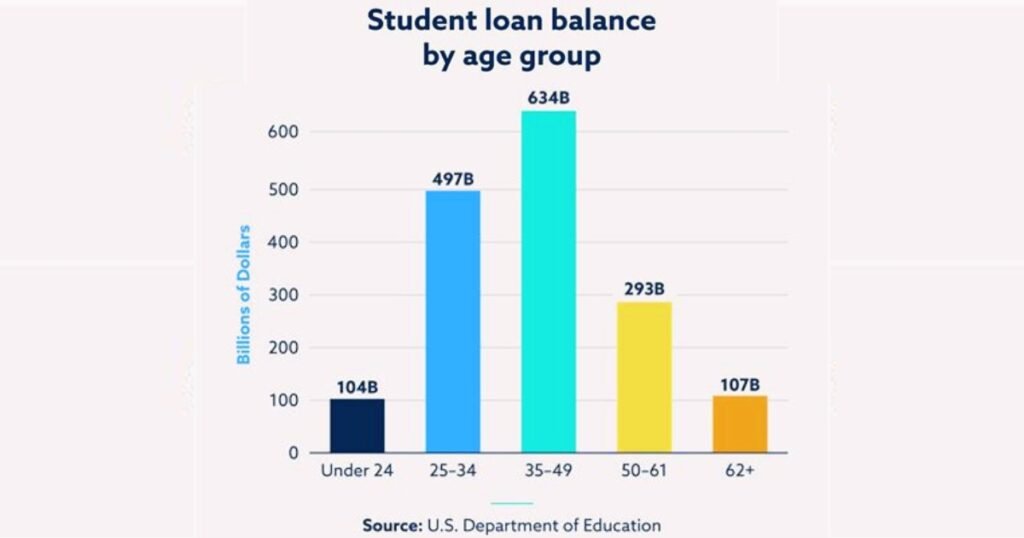
Approximately $1.7 trillion in student loan debt is owed by over 42 million Americans. For families, colleges, and the US labor force, this makes federal student loan policy crucial.
These changes—tighter restrictions on parent and graduate loans, fewer alternatives for repayment, and a new Repayment Assistance Plan (RAP)—affect both present and prospective borrowers. A clause that would bar certain government and nonprofit workers from PSLF if their employers are determined to have a “substantial illegal purpose” has also been introduced by the Education Department.
Federal student loan regulations are revised by OBBBA
With agreement from the Reimagining and Improving Student Education (RISE) Committee, the US Department of Education declared that it had completed the rulemaking process to enact OBBBA.
Stricter limits on Parent PLUS and the elimination of Grad PLUS
The Grad PLUS loan program under OBBBA is coming to an end. In an effort to reduce unsustainable borrowing and unregulated tuition increases, Parent PLUS Loans will also be subject to new limitations.
Big Changes in US Student Loans
New borrowing caps for professional and graduate students
Graduate students can earn up to $20,500 annually (with a $100,000 lifetime cap).
Professional students: up to $50,000 annually (with a $200,000 maximum)
The commencement date of the new Repayment Assistance Plan (RAP)
A single Repayment Assistance Plan (RAP) will replace several current repayment options. Launched in July 2026, it aims to streamline income-based repayment.
Changes to PSLF (Public Service Loan Forgiveness) that are controversial
On July 1, 2026, new PSLF eligibility regulations will go into force. Employers in the public sector who are determined to have a “substantial illegal purpose”—such as helping undocumented immigrants, giving gender-affirming care to minors when it is illegal, or being found guilty of terrorism-related activities—will not be allowed to participate. Going forward, PSLF assistance would no longer be available to employees of such firms.
Procedure for reinstatement and ineligibility
Even in the absence of a formal conviction, the Education Secretary will have the authority to decide ineligibility based on court decisions, settlements, or other evidence. After completing a remedial action plan or waiting ten years, employers are eligible to regain PSLF accreditation. Borrowers’ payments made prior to July 1, 2026, shall be safeguarded.
Pushback and legal challenge
Major labor organizations and four US cities, including Boston and Chicago, have filed a lawsuit in federal court. They contend that the increased PSLF requirements will make it more difficult to fill crucial government and charity positions, breach previous Congressional agreements, and constitute an illegal assault on public sector employees.
In 2022, about 9 million borrowers might qualify for PSLF. Although access was previously increased by the Biden administration, these Trump-era changes drastically reduce it.
What individuals are saying
“We appreciate the committee’s efforts to assist the Department in implementing President Trump’s One Big Beautiful Bill Act, which will simplify our complex student loan repayment system and better align higher education with workforce needs,” stated Nicholas Kent, Under Secretary of Education.
By holding colleges accountable for results and significantly lowering tuition costs, the compromise language reached by the negotiators today will contribute to a revolution in higher education. Borrowers will gain from this since they won’t be forced to take on unmanageable debt to pay for degrees that don’t pay off.
“Major changes will be coming to student loans next year that current and future students will have to keep track of and adjust to in the years ahead,” Alex Beene, a financial literacy lecturer at the University of Tennessee at Martin, told Newsweek.…A Repayment Assistance Plan, which will provide borrowers with some additional relief based on their income but still requires a minimum payment each month in contrast to earlier debt relief plans that have been released, has been created by combining many of the previous forgiveness schemes.
Who will be most impacted?
Borrowers of federal student loans enrolled in graduate or professional programs
Parents who depend on Parent PLUS Loans
Public servants requesting remission of PSLF loans
Higher education institutions, including universities, are under pressure from tuition and outcomes-based responsibility.
Chronology: When the regulations go into force
The negotiated rulemaking session has concluded: announcement from the department
New loan caps and RAP will take effect in July 2026.
New PSLF eligibility will take effect on July 1, 2026.
Next actions for students and debtors
Use your loan servicer to compare your current repayment plan with RAP choices.
Professional and graduate students should consider the new borrowing limits while creating your funding strategy.
PSLF-hopeful workers: keep abreast of your employer’s eligibility.
Consider prospective monthly payments, employment prospects, and return on investment when selecting a degree. Experts say that new limitations and fewer opportunities for forgiveness would encourage some students to pursue more secure careers.
Big Changes in US Student Loans | OBBBA, RAP, PSLF.